
Wheel Offset Explained by ROH
Offset Explained
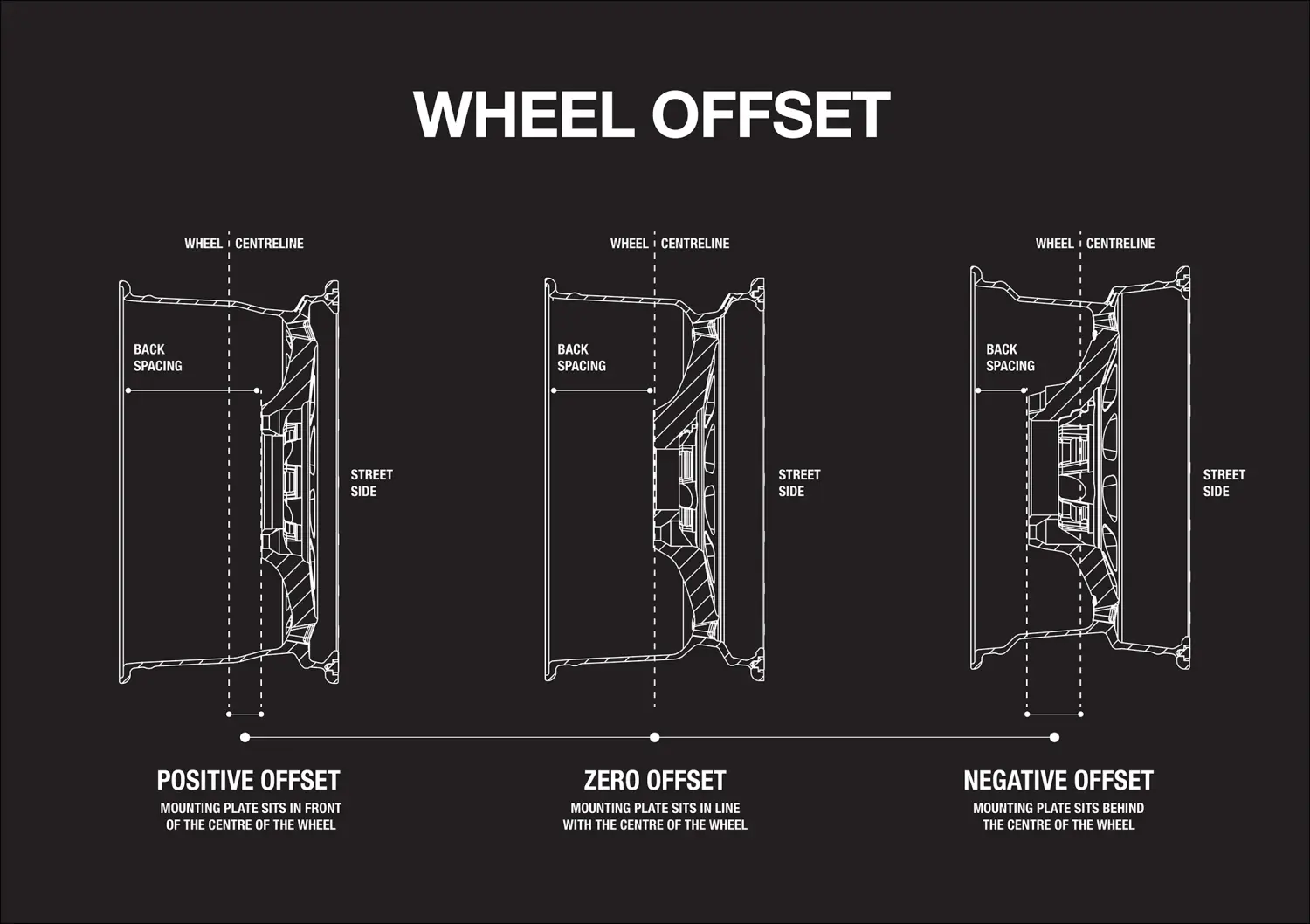
Selecting the right fitment is important to on-road performance and off-road capability, especially for 4x4s exposed to the unique stresses of Australian roads and government regulation. Wheel offset is the distance between the wheel’s mounting face and the centre of the wheel. It determines how far in or out your wheels sit relative to the vehicle’s body and suspension. There are two main categories that a wheel offset can fall into, negative offset, and positive offset.
Negative Offset
Depending on the vehicle a negative offset can cause the mounting face to sit behind the centre of the wheel, creating a wide, aggressive look, that really pushes the wheel out. The result is a ‘poked out’ look you often see on modified 4-wheel drives and off-road vehicles. Negative offset wheels are typically, a more “deep-dish” look or are more concave in design, due to the negative offset. Going negative can improve stability on rough terrain by widening your vehicle’s track; however, it can put extra stress on studs and bearings, as well as potentially causing scrubbing if you don’t have the right setup. Negative offsets are often found with older vehicles, such as the GU/GQ Patrol, and 80 Series Land Cruiser, or run on new vehicles wanting an extremely aggressive set up.
Positive Offset
A positive offset does the opposite, it’s the tucked in conservative look. With a positive offset the mounting face sits in front of the centre of the wheel, which pulls the wheel inward, tucking it in closer to the vehicle’s body. Positive offset can cause a flatter wheel style with less “deep-dish” effect compared to the wheels with lower or negative offset, due to where the mounting face must sit. A positive offset is more common on newer vehicles, like the 300 Series Land Cruiser, and Ford Ranger which have high offset wheels from factory.
Positive, Zero and Negative Offset Compared
Offset | Mounting face position | Where the wheel sits | Typical use |
|---|---|---|---|
Positive (e.g. +35) | In front of the wheel centreline | Tucked in toward the vehicle | Factory fitment on most modern 4x4s and utes |
Zero (0) | On the wheel centreline | Flush with the guard line | Common on modified builds and older 4x4s |
Negative (e.g. −22) | Behind the wheel centreline | Pushed outward, wider track | Aggressive builds, older live-axle 4x4s |
The larger the positive number, the further in the wheel sits. The larger the negative number, the further out it sits. A change of 25mm in offset moves the wheel 25mm in or out.
How to Measure Wheel Offset
To get the centreline, measure across the width of the wheel and find the middle point. From this position, the mounting surface shows where the wheel sits on the hub.
The distance between these two points if the wheel offset, and it is generally measured in millimetres. It is important to remember that wheel width is measured between the bead seats, not the outer edges. If measured by hand, figures may differ slightly from the standard measurements because wheel width is measured differently. If your hub surface is further out than the centreline, it’s positive. If it’s further in, it’s negative. Below is a video explaining this.
Recommended Offsets for Your Vehicle
ROH publishes recommended offsets for over 100 vehicles, based on fitment testing in Australia. Each vehicle page lists the exact sizes and offsets available, and flags which fitments sit within standard guards.
Toyota Hilux · Ford Ranger · Isuzu D-Max · Nissan Navara · Mazda BT-50 · Toyota Prado · LandCruiser 70 Series · Mitsubishi Triton · VW Amarok · Ford Everest
Or use ADD MY VEHICLE above to filter the full range by your make, model and year.
Legal Considerations and Regional Advice
Before modifying your vehicle, we always recommend doing your homework prior to making changes to your factory offset and wheel sizing, as local laws in Australia can vary between states. Aside from the legal ramifications, it’s important to consider the safety of your car, as by putting an offset that is higher than your factory fitment you can cause what’s called under tracking, which is both illegal and can create poor stability. On the flip side, running a very aggressive negative offset can push your wheels out beyond your guards, which is also illegal and can increase the chance of fouling. The best thing you can do is talk to your local ROH dealer roh.com.au/where-to-buy/, as they will be able guide you on what’s best suitable for your specific vehicle and setup.
Why Use ROH Wheels?
ROH Wheels are offered in a range of fitments to suit everything from a simple set up to a highly modified 4x4. Built for tough Australian conditions, ROH Wheels provide high load ratings, durable build quality, and designs that feature genuine bead-locks for those who desire extreme performance.
True Track fitments
Some vehicles leave the factory with a rear track narrower than the front. The LandCruiser 70 Series is the best-known example. ROH offers True Track fitments for these vehicles — a more negative offset on the rear wheels brings the rear track out to match the front.
On a 79 Series, that means pairing a 17x9 −12 front with a 17x9 −59 rear on alloy, or a 17x8 0 front with a 17x8 −47 rear on steel. See all 70 Series fitments.
It is important to understand these wheel offsets when choosing wheels for your vehicle, as they can significantly impact handling and performance.
If you’re ready to upgrade your wheels check out our range of off-road and street wheels, produced in a range of designs and fitments to transform your vehicle setup.